

Award-Winning Immigration Agency.
Over a decade of success.
Our clients are treated like family.
Available 365 days a year.
120+ 5-star Google reviews.
Contact Andreas Athanasiou directly. Book your free 1–hour consultation.
Skills in Demand Visa (SID) (Subclass 482)
The Skills in Demand Visa (SID) (Subclass 482) allows skilled workers to live and work in Australia temporarily, generally for up to four years, with a pathway to permanent residency.
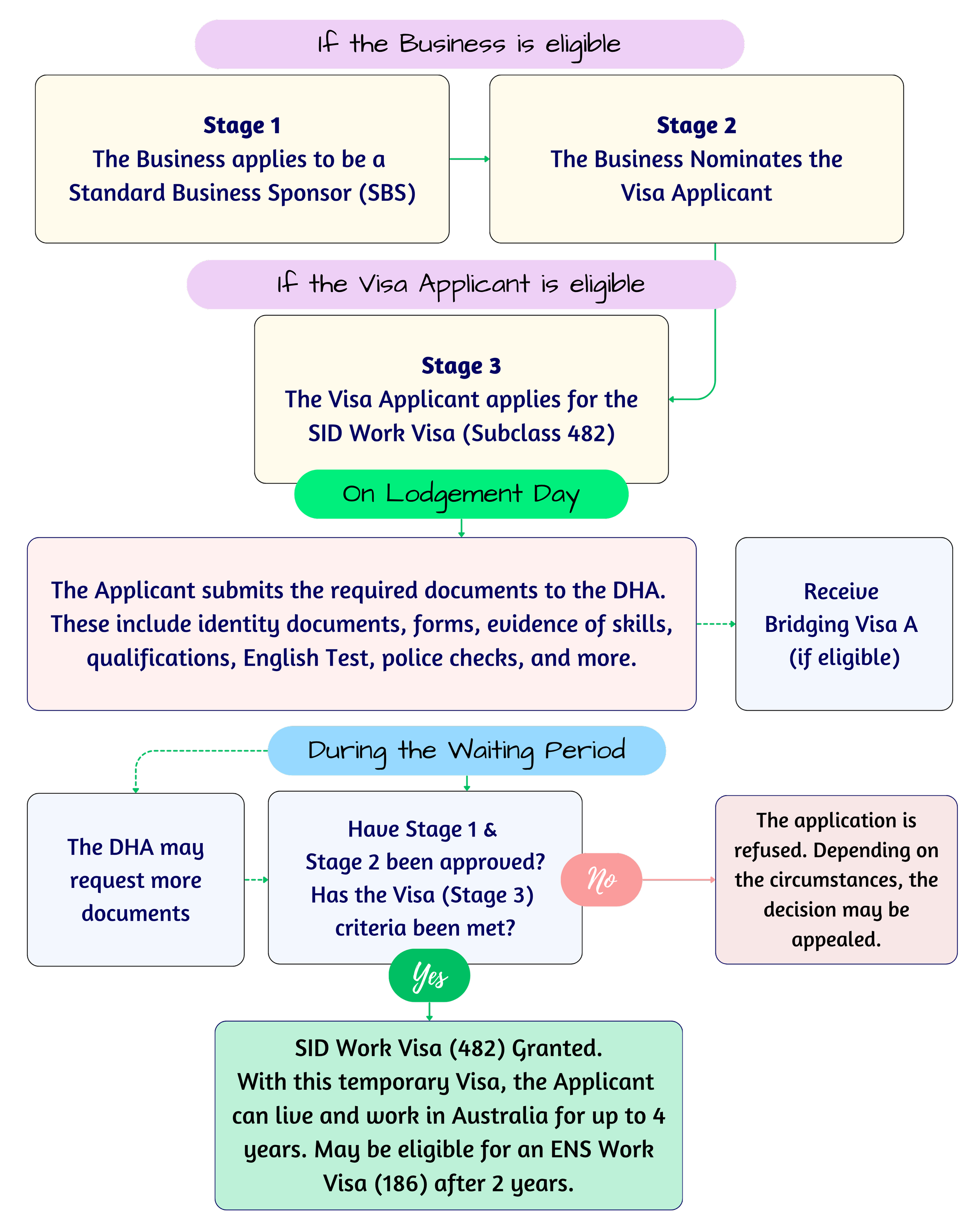
To apply, the applicant must be sponsored by an approved Australian employer or business for the duration of their visa. Before the visa application can be lodged, the employer must first become a Standard Business Sponsor (Stage 1) and then nominate the applicant for a specific position (Stage 2). The visa application itself forms Stage 3 of the process.
Depending on the occupation, employment terms, and individual circumstances, the skilled worker may later become eligible to apply for the Permanent Employer Nomination Scheme Visa (ENS) (Subclass 186) after two years of employment with the same sponsor.
Given the complexity of the Work Visa process and the numerous eligibility requirements involved, we recommend booking a complimentary consultation with Andreas Athanasiou to discuss your specific circumstances and pathway options.
Eligibility
To be eligible to apply for the Skills in Demand Visa (SID) (Subclass 482), an applicant must generally satisfy the primary visa and nomination requirements set out under the Migration Act 1958 and the Migration Regulations 1994, including the relevant Schedule 2 criteria:
• Be in or outside Australia at the time of application.
• Not hold certain visas that prevent further onshore applications.
• Have complied with all previous visa conditions.
• Be nominated by an approved Australian employer or business sponsor.
• Be employed in the nominated occupation for that sponsor.
• Select an occupation listed on the relevant Skilled Occupation List.
• Possess the skills and employment background required for that occupation.
• Have at least one year of verifiable work experience in the nominated role.
• Hold the relevant qualifications (where required).
• Obtain a positive skills assessment (in some cases).
• Maintain adequate health insurance (some exemptions apply).
• Meet the English language requirement (some exemptions apply).
• Satisfy the character and health criteria.
• Be a genuine applicant for temporary entry and stay.
The criteria listed above represent the minimum requirements only. Additional information and supporting documentation may be required from both the applicant and the sponsoring employer to confirm eligibility.
For personalised guidance and an assessment of your individual circumstances, you are welcome to contact our office for a complimentary consultation.
Streams of the SID Visa
The Skills in Demand Visa (SID) (Subclass 482) is divided into three distinct streams, each designed to address different segments of Australia’s skilled labour market.
Stream 1: Specialist Skills Stream
The Specialist Skills stream is intended for highly skilled, high-income roles. Applicants must be offered a salary that meets or exceeds the Specialist Skills Income Threshold (SSIT) and may be nominated in any ANZSCO occupation, except those classified under Major Groups 3, 7, and 8, which generally include trade workers, machinery operators, drivers, and labourers. This stream is designed to provide greater flexibility for employers seeking to sponsor senior professionals and specialists in high-value roles.
Stream 2: Core Skills Stream
The Core Skills stream applies to occupations that form the backbone of Australia’s skilled workforce. Applicants must be offered a salary that meets or exceeds the Temporary Skilled Migration Income Threshold (TSMIT) and be nominated in an occupation listed on the Core Skills Occupation List (CSOL). This stream replaces the former medium-term skilled pathway and is subject to standard skills, English language, and experience requirements.
Stream 3: Labour Agreement Stream
The Labour Agreement stream continues the existing arrangements under the former Temporary Skill Shortage (TSS) (Subclass 482) visa. It allows employers to sponsor overseas workers in accordance with the terms of an approved Labour Agreement negotiated with the Australian Government. This stream remains available while the proposed Essential Skills Stream is being developed and caters to occupations or concessions not otherwise available under the standard SID streams.
Prerequisities (Sponsor)
Stage 1 – Standard Business Sponsorship (SBS)
The first stage requires the employer or business to apply to become a Standard Business Sponsor (SBS). To be approved, the business must be legally established and actively operating in Australia, among other criteria. More information for Business Sponsors can be found in this link.
Stage 2 – Nomination Application
Once approved (or after submitting the SBS application), the sponsor must nominate a position that appears on the relevant Skilled Occupation List. This involves demonstrating a genuine need for the role and offering terms and conditions of employment that meet Australian standards, among other criteria. Some nominated occupations may also be subject to specific caveats or additional requirements.
Only after the nomination has been submitted can the applicant apply for the Skills in Demand Visa (Subclass 482), which is Stage 3.
The first two stages, which involve the employer or sponsoring business, can be complex and document-intensive, requiring careful preparation and compliance with all Department of Home Affairs requirements. For personalised guidance and an assessment of your sponsor’s circumstances, you are welcome to contact our office for a complimentary consultation.
Evidence of Experience
The applicant must demonstrate that they possess the skills and experience necessary to perform the nominated occupation and have at least one year of verifiable work experience and the qualifications required for that occupation. This experience must be full-time (or an equivalent period of part-time work) and expected to have been completed within the five years immediately before lodging the visa application.
To evidence this, applicants may provide (but are not limited to):
• Qualification certificates and testamurs.
• Professional registrations or licences.
• Employment references from previous employers.
• Skills Assessment (in some cases).
• Updated curriculum vitae.
• Payslips.
• Bank statements showing wage deposits.
• Superannuation records.
In some cases, if the applicant does not hold formal qualifications, three to five years of relevant full-time experience may be accepted in lieu of qualifications, depending on the occupation and the specific requirements set by the Department of Home Affairs.
Furthermore, applicants may also be required to complete a Skills Assessment to verify that their skills meet Australian standards for the nominated occupation.
English Language Requirements
If the applicant holds a valid passport from New Zealand, Canada, the Republic of Ireland, the United Kingdom, or the United States of America, they are exempt from undertaking an English language test. Applicants who do not hold a passport from one of the these countries, or who do not meet any other exemption, must achieve the minimum required English test scores in a single attempt within three years prior to lodging the visa application.
Accepted English language tests include:
IELTS General Training.
IELTS Academic (International English Language Testing System).
PTE Academic.
LanguageCert Academic.
Michigan English Test (MET).
Occupational English Test (OET).
CELPIP General (Canadian English Language Proficiency Index Program).
TOEFL iBT.
Important: The Department of Home Affairs does not accept online or remote-proctored English tests (also known as “at-home” tests). Only results from officially supervised, in-person tests are accepted for Australian visa purposes.
Visa Application Charge
The Department of Home Affairs (DHA) charges an application fee of AUD $4,015 for a Skills in Demand Visa (SID) (Subclass 482).
If a spouse and/or dependent children are included in the application, additional DHA fees apply.
In addition to the DHA fee, applicants should also budget for other potential costs, which may include:
• Immigration health examinations.
• Skills Assessment (in some cases).
• Australian police clearance certificates.
• Overseas police clearance certificates.
• Registration of relationship (if applicable).
• Certified translations of documents.
• Bank or credit-card surcharges.
• Subsequent Temporary Application Charge (STAC) (in some cases).
• Professional fees charged by the appointed Migration Agency.*
*To help reduce financial pressure, Olympus Migration offers flexible payment plans, allowing professional fees to be paid in instalments over a period of up to 15 months.
After the Visa Lodgement
If the applicant is overseas at the time of applying for the Skills in Demand Visa (Subclass 482), it is generally recommended that they remain outside Australia while awaiting a decision.
If the applicant is in Australia when lodging the visa, and depending on the visa currently held, they will usually be granted a Bridging Visa A (BVA) on the day of application. This BVA takes effect the day after their current substantive visa expires, allowing them to remain lawfully in Australia until a decision is made on their Skills in Demand Visa.
Should the applicant wish to travel overseas during this time, they must first apply for and be granted a Bridging Visa B (BVB) before leaving Australia.
The Department of Home Affairs (DHA) currently indicates an average processing time of several months, though this varies regularly. Processing times are determined entirely by the Department and cannot be influenced by a migration agent. Visa applications prepared and lodged by Andreas Athanasiou are submitted in a detailed, decision-ready format that clearly address all evidentiary and procedural requirements.
After the Visa Decision
If the Skills in Demand Visa (Subclass 482) is granted, the applicant becomes a temporary resident of Australia.
During this period, they may live, work, and travel freely within Australia and overseas, provided they comply with all visa conditions and continue to work only for their approved sponsor.
After two years of employment with the same sponsoring business — and by maintaining full compliance with visa conditions — the applicant may become eligible to apply for the Employer Nomination Scheme (ENS) Visa (Subclass 186) under the Temporary Residence Transition Stream (link).
In the following link, you can view genuine testimonials from past clients and individuals who have received immigration advice from our Director, Andreas Athanasiou. These are sourced directly from our Google page and reflect consistently outstanding client feedback.


20 Recent Work Visa Grants
-
![Success Stories – Olympus Migration | Andreas Athanasiou | Australian Visas | Partner Visas | Work Visas | Citizenship | Free Consultations]()
SC186 Visa
-
![Success Stories – Olympus Migration | Andreas Athanasiou | Australian Visas | Partner Visas | Work Visas | Citizenship | Free Consultations]()
SC186 Visa
-
![Success Stories – Olympus Migration | Andreas Athanasiou | Australian Visas | Partner Visas | Work Visas | Citizenship | Free Consultations]()
SC186 Visa
-
![Success Stories – Olympus Migration | Andreas Athanasiou | Australian Visas | Partner Visas | Work Visas | Citizenship | Free Consultations]()
SC482 Visa
-
![Success Stories – Olympus Migration | Andreas Athanasiou | Australian Visas | Partner Visas | Work Visas | Citizenship | Free Consultations]()
SC482 Visa
-
![Success Stories – Olympus Migration | Andreas Athanasiou | Australian Visas | Partner Visas | Work Visas | Citizenship | Free Consultations]()
SC482 Visa
-
![Success Stories – Olympus Migration | Andreas Athanasiou | Australian Visas | Partner Visas | Work Visas | Citizenship | Free Consultations]()
SC482 Visa
-
![Success Stories – Olympus Migration | Andreas Athanasiou | Australian Visas | Partner Visas | Work Visas | Citizenship | Free Consultations]()
SC186 Visa
-
![Success Stories – Olympus Migration | Andreas Athanasiou | Australian Visas | Partner Visas | Work Visas | Citizenship | Free Consultations]()
SC482 Visa
-
![Success Stories – Olympus Migration | Andreas Athanasiou | Australian Visas | Partner Visas | Work Visas | Citizenship | Free Consultations]()
SC186 Visa
-
![Success Stories – Olympus Migration | Andreas Athanasiou | Australian Visas | Partner Visas | Work Visas | Citizenship | Free Consultations]()
SC482 Visa
-
![Success Stories – Olympus Migration | Andreas Athanasiou | Australian Visas | Partner Visas | Work Visas | Citizenship | Free Consultations]()
SC482 Visa
-
![Success Stories – Olympus Migration | Andreas Athanasiou | Australian Visas | Partner Visas | Work Visas | Citizenship | Free Consultations]()
SC186 Visa
-
![Success Stories – Olympus Migration | Andreas Athanasiou | Australian Visas | Partner Visas | Work Visas | Citizenship | Free Consultations]()
SC186 Visa
-
![Success Stories – Olympus Migration | Andreas Athanasiou | Australian Visas | Partner Visas | Work Visas | Citizenship | Free Consultations]()
SC186 Visa
-
![Success Stories – Olympus Migration | Andreas Athanasiou | Australian Visas | Partner Visas | Work Visas | Citizenship | Free Consultations]()
SC482 Visa
-
![Success Stories – Olympus Migration | Andreas Athanasiou | Australian Visas | Partner Visas | Work Visas | Citizenship | Free Consultations]()
SC482 Visa
-
![Success Stories – Olympus Migration | Andreas Athanasiou | Australian Visas | Partner Visas | Work Visas | Citizenship | Free Consultations]()
SC186 Visa
-
![Success Stories – Olympus Migration | Andreas Athanasiou | Australian Visas | Partner Visas | Work Visas | Citizenship | Free Consultations]()
SC186 Visa
















The Olympus Migration Difference
Expert Advice
Our Director, Andreas Athanasiou, is a Registered Migration Agent (MARN 1685134) and a member of the Migration Institute of Australia (MIA), bringing over a decade of experience and having managed 1,000+ visa lodgements across a wide range of complex and straightforward migration matters successfully.

Fixed Fees
We believe clarity builds trust. That’s why we operate on a fixed-fee basis — no hidden costs or surprise charges at any stage of your matter. To ease financial pressure, we also offer flexible payment plans of up to 15 months, including post-lodgement, tailored to suit your individual circumstances and financial situation.

Direct & Prompt
You deal directly with our Director, not a case manager or junior staff, ensuring clear and consistent communication. We respond promptly and are available 365 days a year, with your matter personally managed from start to finish, providing experienced oversight, strong accountability, and confidence at every stage.

Peace of Mind
We have an outstanding record, however if your application is refused, we may assist with a merits review, at our discretion, without additional professional fees. This reflects our ongoing commitment to you — our Peace of Mind Policy, because once you engage us, you are family, and we stand by you every step of the way.


Our Step-by-Step Process
-
1. Book your Free 1-Hour Consultation
Begin by contacting our office via phone, email, or online enquiry to arrange your complimentary 1-hour consultation. Our friendly team is here to assist you, and we are available 365 days a year. We offer both face-to-face meetings in Melbourne and Zoom consultations for clients across Australia and worldwide, ensuring flexibility no matter your location.
-
2. Meet with Andreas Athanasiou (RMA)
During your complimentary 1-hour, obligation-free consultation, you will speak directly with our Director, who will take the time to understand your circumstances in detail. You will have the opportunity to ask questions, receive a clear assessment of your eligibility, and be provided with tailored advice along with a written outline of the most suitable visa pathways available to you.
-
3. Formally Appoint us to Act for You
If you decide to proceed and meet the relevant eligibility criteria, you may formally appoint our office to act on your behalf. You will be provided with a comprehensive Agreement for Services and Fees, clearly outlining the scope of work, professional fees, and terms of engagement. Once this is reviewed and signed, you officially become a valued client of Olympus Migration.
-
4. We Prepare & Lodge Your Application
Following your appointment, we will issue you with a detailed checklist of required documents tailored to your specific matter. As you begin providing the necessary information, we will carefully prepare your application and supporting documentation. Once you have reviewed and approved our work, we will lodge your application with the Department of Home Affairs.
-
5. Ongoing Support Until the Decision
After lodgement, our office will manage all correspondence with the Department of Home Affairs on your behalf. We will keep you informed of updates and requests, and remain in contact throughout the process. We may request additional documents after lodgement to ensure your application remains complete. Our representation continues until a final decision is made.
-
6. Our Commitment to our Clients
We have an outstanding record of successful outcomes; however, in the scenario that your application is refused, Olympus Migration will, where appropriate and subject to your ongoing eligibility and instructions, assist you with preparing and lodging a further application or a merits review to the Tribunal, without additional professional fees. This is our ‘Peace of Mind’ policy.
Book a Free 1-Hour Consultation
or
or
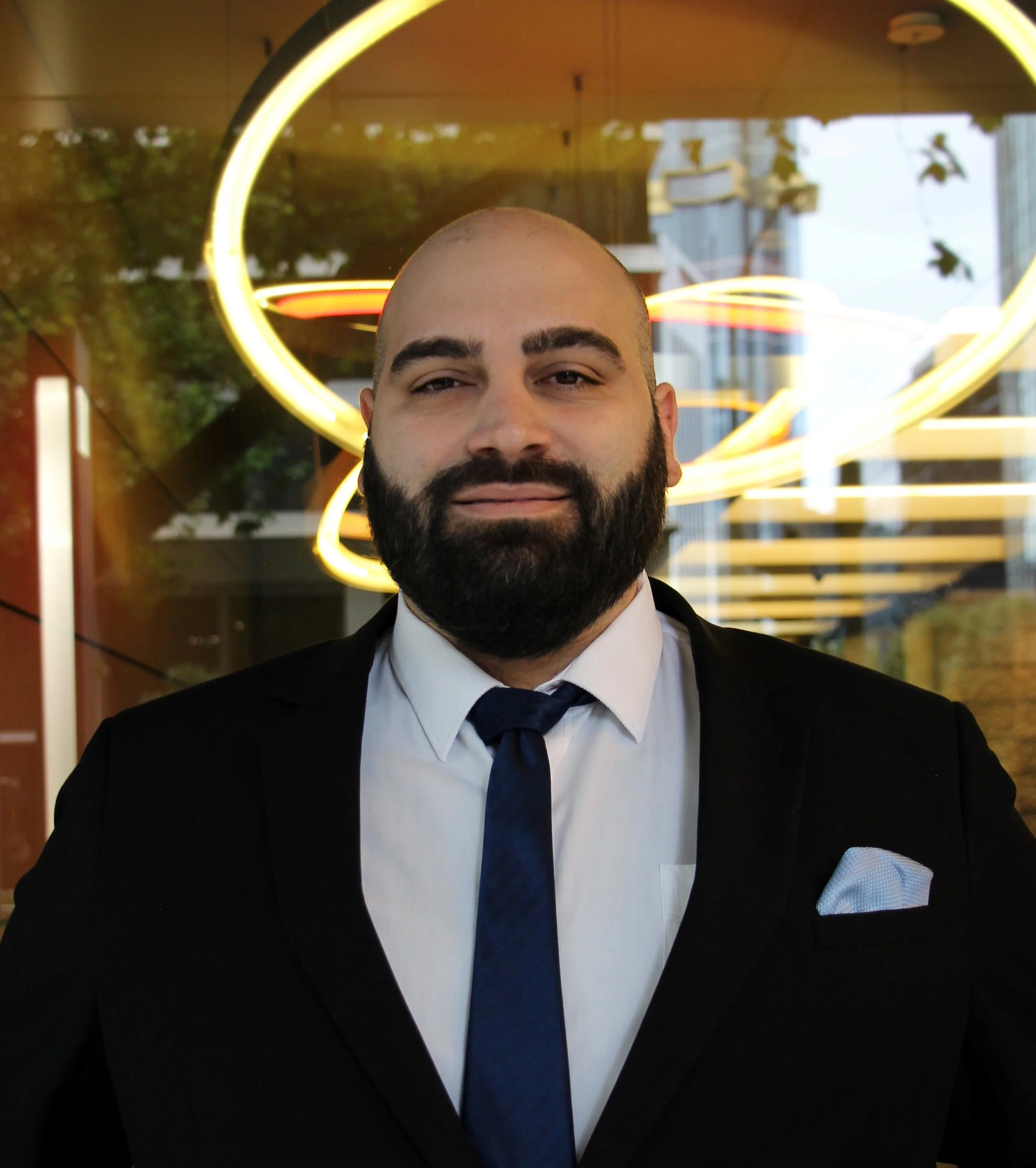
All communication is handled directly by our Director and Registered Migration Agent, Andreas Athanasiou (MARN: 1685134), ensuring clear, consistent, and expert guidance throughout your matter.
Learn more about Andreas on our About Us page.
In-person consultations in Melbourne are available by appointment only.